V.E. Schwab’s “The Invisible Life of Addie LaRue” arrives as a New York Times bestseller with considerable acclaim from NPR, The Washington Post, and a Goodreads Choice Award nomination. The premise glitters with potential: Adeline LaRue, desperate to escape an arranged marriage in 1714 France, makes a deal with a dark god named Luc. She gains immortality but loses the ability to be remembered—everyone forgets her the moment she leaves their presence. Across three centuries, Addie searches for ways to leave her mark on a world determined to erase her. When she meets Henry, a bookseller in 2014 New York who inexplicably remembers her, everything changes.
For thousands of readers, this novel delivered exactly what they craved: lush prose, romantic yearning, and philosophical meditation on memory and legacy. For others, however, the gap between the book’s ambitions and its execution proves too wide to overlook.
Contents
Why The Invisible Life of Addie LaRue Matters
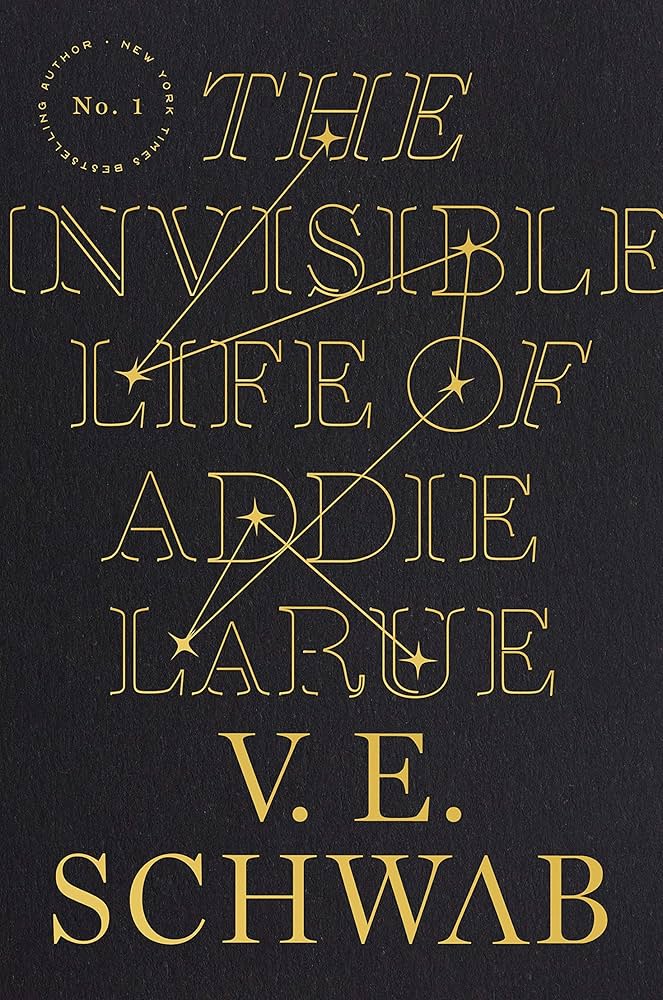
The novel tackles questions that resonate deeply in our social media age: What does it mean to be remembered? Can you matter if no one knows your name? How do we leave our mark? Schwab explores the concept of the palimpsest—a manuscript scraped clean and rewritten, leaving only faint traces—as a metaphor for how people imprint themselves on culture and history. The book’s treatment of these themes, combined with its genre-blending approach and bisexual protagonist, explains much of its appeal to contemporary readers seeking literary fantasy that grapples with philosophical weight.
Author Check

Background: Victoria “V.E.” Schwab has established herself as a prominent voice in fantasy literature, known particularly for her Shades of Magic series.
Previous work: Her bibliography includes “A Darker Shade of Magic,” “The Fragile Threads of Power,” and several acclaimed fantasy novels demonstrating her skill with atmospheric world-building.
Schwab possesses an undeniable talent for lyrical prose and creating evocative settings that blur the line between fantasy and literary fiction. Schwab’s strengths shine throughout—her language sparkles, her scenes breathe with atmosphere. The question becomes whether gorgeous sentences can carry a 448-page novel when fundamental structural elements falter.
The Story (Spoiler-Free)
Addie LaRue refuses the life her French village demands: marriage, children, domestic servitude. She prays to the old gods as darkness falls, breaking neighbor Estele’s cardinal rule about never summoning gods that answer after dark. Luc appears, granting her freedom and immortality at a devastating cost—no one can remember her. She becomes invisible to memory itself, unable to leave marks through writing or art. The narrative alternates between Addie’s centuries of existence—from Enlightenment Paris to Revolutionary France to modern New York—and her connection with someone who finally, impossibly, remembers her name.

Three Insights
1. The Stasis Problem: When 300 Years Change Nothing
Schwab labels Addie a “dreamer” from the start—someone who craves more than her circumstances allow, who needs to leave a mark on the world. This artistic temperament makes the curse particularly cruel: Addie wants to create but cannot hold a pen without the words fading. The novel’s most compelling idea emerges from this tension: Addie learns to leave impressions through inspiration rather than direct creation, becoming a muse whose influence ripples through art and music across centuries. “Ideas are wilder than memories,” Luc tells her, and Schwab wants readers to see how Addie masters this truth.
The problem is that mastery requires growth, and Addie doesn’t change. Whether in 1720 or 2014, she thinks, speaks, and behaves essentially the same way. She witnesses the French Enlightenment, sits in salons with Voltaire and Diderot, survives the Revolution, sees both World Wars—yet none of this transforms her perspective or deepens her understanding. Compare her to Remy Laurent, the young man she meets in 1724 Paris. Remy escaped his own small village and, as a man with access to education, grew into Enlightenment intellectual circles. He matures across the decades, and Addie knows him. She, despite immortality, shows less development than this mortal.
Many readers may find Addie’s constancy comforting—she represents resilience, refusing to let time wear away her core self. But for most of us, this stasis feels like a missed opportunity. Three centuries should reveal how experience shapes us, how survival changes us, how even the most stubborn personality evolves through accumulated wisdom or trauma.
My takeaway: Character stasis can work in shorter timeframes, but across 300 years, it strains credibility. Schwab asks readers to believe someone could witness humanity’s most transformative centuries and remain fundamentally unchanged. Some readers may embrace this as testament to Addie’s strength, but most will see it as a failure of imagination about what immortality might actually mean for consciousness and identity.
2. Symbols in Service of Theme—Or Substituting for It
Schwab constructs elaborate symbolic architecture: the wooden bird Addie’s father carved, the tree she plants over Estele’s grave, Addie’s seven freckles constellation-like across her face, Luc’s ever-shifting green eyes. These symbols should deepen the novel’s exploration of memory, mark-making, and legacy. The wooden bird becomes Addie’s first accidental mark—she loses it during her brutal first Paris winter, only to discover years later that it inspired a famous sculpture. This teaches her that ideas can outlast memories, that influence works through indirect channels.
The tree over Estele’s grave carries even more weight. Estele preferred old gods and wild places to Christian cemeteries, and Addie plants a sapling to honor that preference while creating something tangible and real—perhaps her most solid contribution to the physical world. Trees also represent what Addie wanted: roots that don’t imprison, growth that follows natural patterns rather than prescribed roles. When she later finds the tree destroyed, it severs her last connection to her origins.
Schwab’s prose makes these symbols feel significant in the moment. Whether they resonate beyond that moment depends largely on individual reading experience. Fans praise how the symbols weave through the narrative, creating thematic coherence. Critics argue the symbols get announced rather than earned—we’re told about their importance through repetition (Addie’s “seven freckles like a constellation” appears dozens of times) rather than discovering their meaning organically through character development.
The writing itself divides readers similarly. Schwab crafts beautiful sentences—lush, atmospheric, poetic. For many, this lyrical quality creates the immersive experience the story needs. For others, the prose tips into self-indulgence, prioritizing elegant phrasing over narrative momentum. The line between “literary” and “purple” proves subjective, and readers land on different sides.
My takeaway: The symbolic elements work best for readers who connect emotionally with Addie’s journey despite her lack of arc. If you feel her isolation and yearning, the repeated symbols reinforce that emotional experience. If you struggle to connect with her character, those same symbols start to feel like writerly tics—mere decoration rather than illumination.
3. The Curse’s Flexible Logic
Fantasy worlds need internal consistency. Readers suspend disbelief more readily when magic follows clear rules. Schwab establishes that Addie cannot write (words fade), cannot draw (images vanish), and cannot speak her own name. These limitations should create consistent obstacles and force creative solutions. The concept of Addie as a palimpsest—constantly erased, leaving only faint impressions—provides an elegant metaphorical structure.
The execution proves messier. Addie can’t write, but she can finger-paint. She can’t draw, but she guides another’s hand to write her story. She can’t leave marks, but she plants trees. The curse seems to bend around plot needs rather than following iron-clad logic. Some readers view this flexibility as realistic—curses might have ambiguous boundaries, and Addie spends centuries discovering loopholes. Others find it frustrating, unable to understand what Addie can and cannot do at any given moment.
The central relationship raises similar questions. Fans celebrate the romance as swoon-worthy, built on Addie finally being seen after centuries of invisibility. The emotional resonance of that recognition carries enormous weight for readers who connect with themes of loneliness and the human need to be known. Skeptics see a relationship founded more on desperation than genuine compatibility—two lonely people clinging to each other because they’re each other’s only option.
My takeaway: The curse’s inconsistencies matter more or less depending on your reading priorities. If you’re invested in the emotional journey, the logical gaps won’t bother you—you’ll accept them as necessary for the story Schwab wants to tell. If you prioritize world-building coherence and clear magical systems, those same gaps become immersion-breaking obstacles.
What Sets The Invisible Life of Addie LaRue Apart
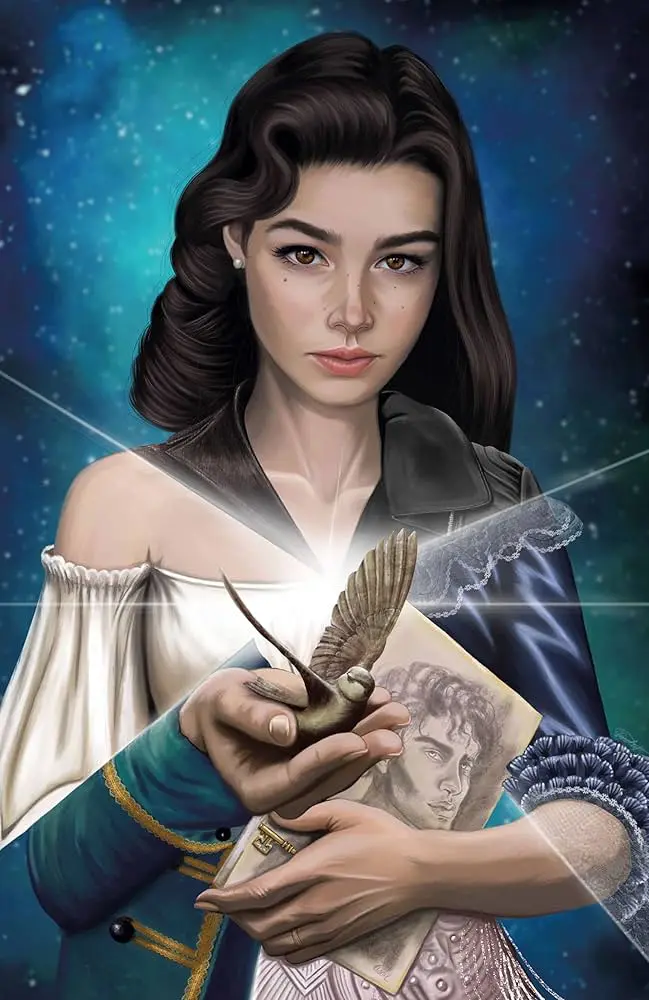
Schwab attempts ambitious genre-blending—historical fantasy meets literary fiction meets romance. The novel moves between centuries with confidence, name-dropping real historical figures like Voltaire, Diderot, and Beethoven while building fictional artists into the narrative. Addie’s bisexuality receives casual, matter-of-fact treatment, with her attractions to both men and women portrayed as equally natural and significant. The metafictional framing device adds another layer of complexity to an already layered narrative.
These elements explain the book’s strong following. Readers hungry for literary fantasy with philosophical depth, romantic yearning, and queer representation found exactly what they wanted. The book delivers atmosphere in abundance, explores meaningful questions about legacy and memory, and creates a Gothic fairy-tale mood that many find enchanting.
Who Should Read This
Perfect for:
- Readers who prioritize lyrical prose and atmospheric writing above plot-driven narratives
- Those who connect with themes of loneliness, invisibility, and the struggle to be remembered
- Fans of romantic fantasy who enjoy philosophical undertones
- Fans of V.E. Schwab’s other work who want to complete her bibliography
Skip if: You need characters who transform over time, especially across centuries-long timespans. Skip if you prefer fantasy with rigorous world-building logic and consistent magical rules. Skip if you want historical fiction that engages deeply with specific periods rather than using them as atmospheric backdrops. Skip if slow-paced, contemplative narratives feel repetitive rather than meditative to you.
Memorable Quotes
“Ideas are so much wilder than memories, so much faster to take root.”
This line captures the novel’s central thesis—that cultural influence matters more than personal recognition, that being forgotten as an individual doesn’t mean you left no mark. For some readers, Schwab dramatizes this concept beautifully through Addie’s centuries as a muse. For others, the idea remains more interesting in theory than in execution.
Bottom Line
“The Invisible Life of Addie LaRue” succeeds brilliantly for readers who value atmosphere, romantic yearning, and philosophical meditation on memory and legacy. Its devoted fanbase found a book that spoke to feelings of invisibility and the hunger to matter, wrapped in gorgeous prose and sweeping historical scope. The novel’s critical acclaim and commercial success reflect genuine strengths: Schwab’s lyrical writing, her ambitious thematic exploration, and her creation of a premise that resonates emotionally with many readers.
For others, including this reviewer, the gap between ambition and execution proves too wide. The novel’s length works against it when characters remain static, and situations repeat. The symbolic architecture—wooden birds, planted trees, constellation freckles—gets announced through repetition rather than discovered through revelation. The historical settings blur together rather than feeling distinct and lived-in. The central relationship, while emotionally resonant for many, reads to some as built more on narrative convenience than earned connection.
Understanding why the book works for its admirers matters: they found emotional truth in Addie’s journey even when the mechanics felt shaky. They connected with the isolation, the yearning, the quiet tragedy of being forgotten. The prose created the immersive experience they wanted. These are legitimate responses to a book that genuinely moved thousands of readers.
This reviewer simply isn’t among them. The beautiful sentences couldn’t compensate for fundamental structural concerns about character development, world-building consistency, and narrative momentum across 448 pages.
Worth your time? Only if you value prose style so highly that you’ll forgive the absence of plot, character development, consistent world-building, and earned emotional payoffs. Only if repetition doesn’t bother you. Only if you’re satisfied with books that pose interesting questions without providing compelling answers.
The Invisible Life of Addie LaRue asks profound questions about memory, legacy, and freedom. Whether it provides satisfying answers depends largely on what you need from a 448-page historical fantasy. Schwab created something that deeply moved many readers while leaving others wishing for more narrative substance beneath the undeniably beautiful surface.





I found the concept of 300 years without significant changes a bit hard to digest. Real life is full of events that force us to change. This seems unrealistic.
But Vijay D, isn’t fiction about exploring the impossible? I think that’s the beauty of such stories.
True, fiction is all about ‘what if’—but the question is whether the book actually makes us believe this particular impossible thing, and that’s where readers split.
That’s the crux of my critique, too—immortality without transformation feels like a missed opportunity to explore what centuries of existence should reshape in a person.
I’ve heard a lot about this book. The theme of invisibility in a crowded world is something that resonates with many, I suppose. Might give it a read.
You’ll definitely feel it then—that theme of being invisible in a crowded world is honestly the book’s strongest point.
I think the whole point of Addie LaRue’s life being invisible is such a unique storyline. Makes you think how you want to be remembered.
Exactly—it’s such a thought-provoking idea about how you want to be remembered, even if the book doesn’t fully deliver on exploring it.
Hey Vishal, nice review! But does Addie really go through no changes in 300 years or is it more about subtle transformations she experiences? Would love to dive deeper into this aspect.
That’s a lovely question, Ritika_says. I think the beauty lies in the subtleties of her journey, which can be overshadowed by the overarching storyline.
Right—those subtle shifts exist, but the way the book is structured, they get lost in the bigger picture, which explains why readers come away with totally different impressions.
Nah, I don’t think people change that much, even in real life. The book kinda gets that right, doesn’t it?
Fair point, but I’d say 300 years is different from a regular lifetime—that much time should shift how you see the world, even if you’re stubborn.
Good question! The subtle changes are there, but there’s just so much repetition of the same Addie that it overshadows them, which is why people have different takes on this.