Contents
I was 8 years old when J.K. Rowling’s first Harry Potter book hit the shelves in 1997. Looking back, it’s hard to overstate how much it shaped childhood for an entire generation. Classrooms buzzed with discussions about the latest installment, newspapers ran stories about the latest Harry Potter book releases, and I still remember the queues outside local bookstores to get their hands on the latest copies. The series wasn’t just a publishing success; it became an integral part of our lives in a way that very few children’s books ever do.
Introduction
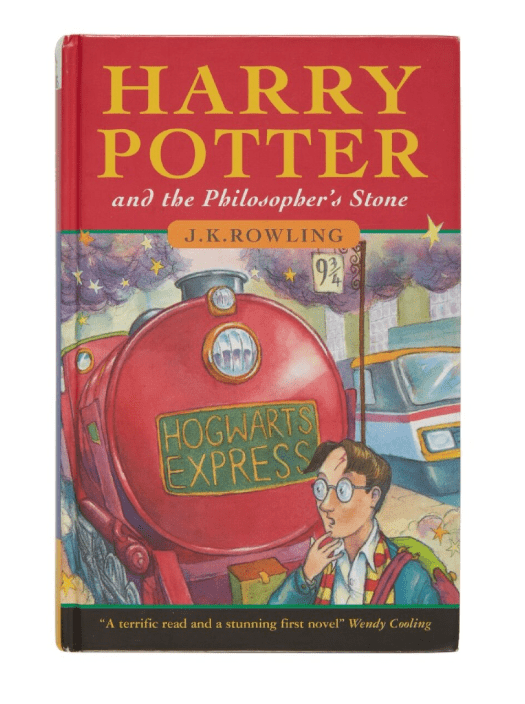
It’s been over twenty-five years since Harry Potter and the Philosopher’s Stone first hit bookshelves, yet somehow it still feels relevant. Perhaps it’s because Rowling didn’t just write a magical adventure for kids; she touched on themes like wanting to fit in, feeling different, and making choices that haunt you — everyday ideas that most of us associate with, in one way or another.
In today’s world, when most children are busy curating their online image and trying to belong in a different way, Harry’s journey from being alone — under the stairs, ignored by his adopted family — toward finding somewhere he belongs feels familiar.
Why This Book Matters
Rowling portrays the wizarding world, despite its fantastical elements, as a reflection of our ordinary (Muggle) world, which appears to mirror prejudice, fear, and the abuse of power. The story doesn’t rely on magic to solve all its problems; often, human connections, sacrifice, and the choice to love rather than hate are the themes that the author highlights.
There are moments where the story leans a bit toward “good guys” vs. “bad guys,” but the emotional groundwork—Harry missing a home, longing for friends, and wondering what his own choices mean—feels relatable nonetheless. It seems that this human angle beneath the magic has kept the story alive for readers across generations.
Author Check
J.K. Rowling is a household name in the fantasy genre. She studied French and Classics at the University of Exeter. She is best known for creating the Harry Potter series, which has sold over 500 million copies and has forever transformed the children’s literature/fantasy genre. Rowling has also written many successful books for adults and earned many literary awards. Her creative stories and memorable characters have made her one of the most influential voices in modern fantasy literature.
The Story – Spoiler-Free
When Harry Potter lives with his cruel relatives, the Dursleys, he represents every child who has felt unwanted and different. His discovery of the wizarding world through Hagrid’s taking him to Diagon Alley symbolizes the transformative moment when outcasts find their tribe. At Hogwarts School of Witchcraft and Wizardry, Harry encounters not just magic lessons but life lessons about friendship, moral courage, and the complexity of good versus evil.

Three Core Insights
The Psychology of Belonging
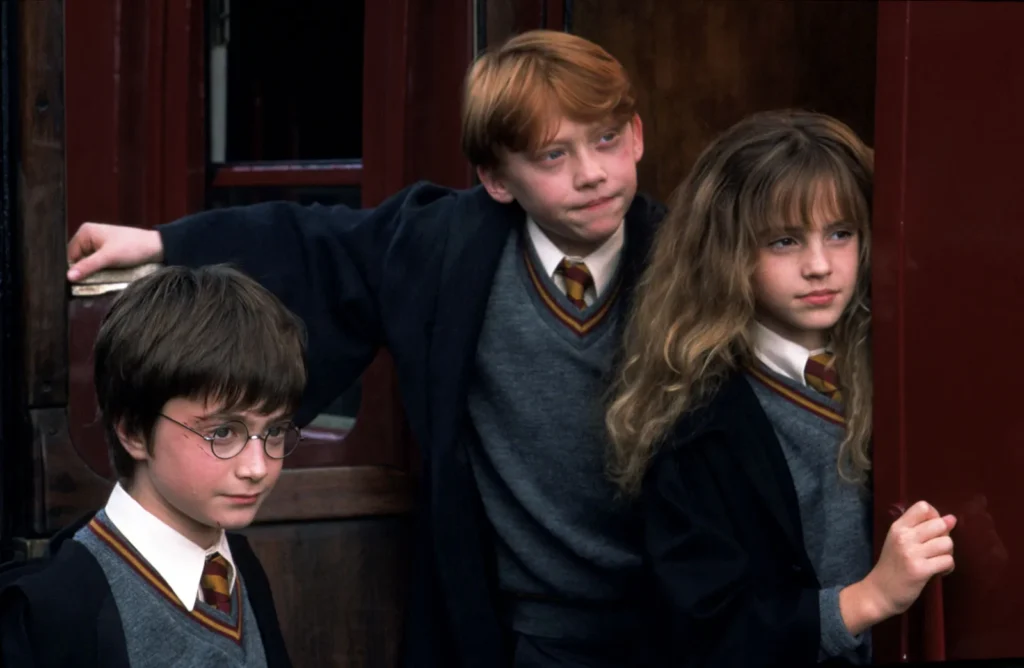
Rowling shows that home means more than a physical location. Harry’s first experiences at Hogwarts reveal a boy carrying deep emotional scars from years of neglect, explaining both his desperate need for belonging and his tendency to prove his worth by reckless self-sacrifice. The friendship between Harry and Ron develops through genuine emotional stages, while Hermione completes this trio by bringing intellectual strength tempered with loyalty. This relationship demonstrates how “there are more important things—friendship and bravery” than individual achievement.

Moral Complexity Beyond Good vs. Evil
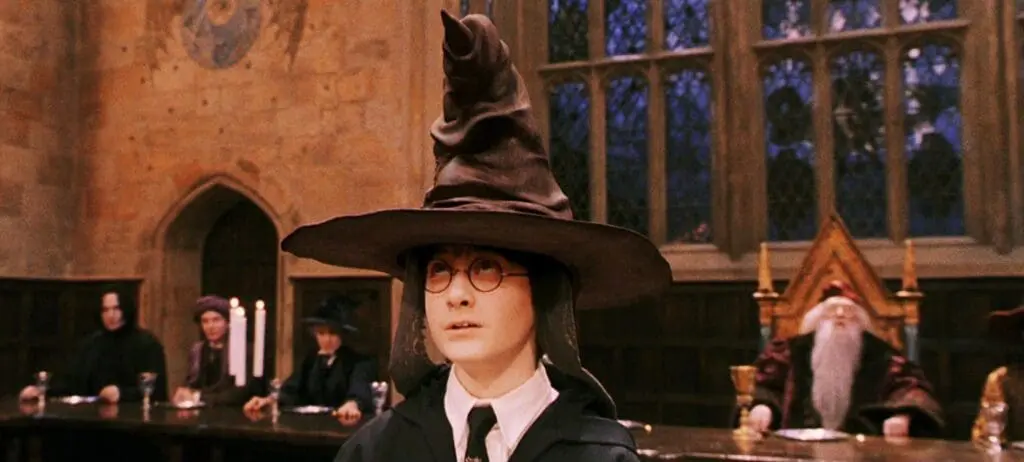
The story challenges readers to recognize that antagonism and protection can coexist in the same person. Professor Severus Snape embodies this moral complexity, treating Harry with contempt while secretly protecting him. The Sorting Hat explores the tension between fate and free will, suggesting we become who we choose to be rather than who we’re expected to become. When Harry refuses Slytherin despite the Hat’s suggestion, he demonstrates that our choices matter more than our natural inclinations.
The True Nature of Courage
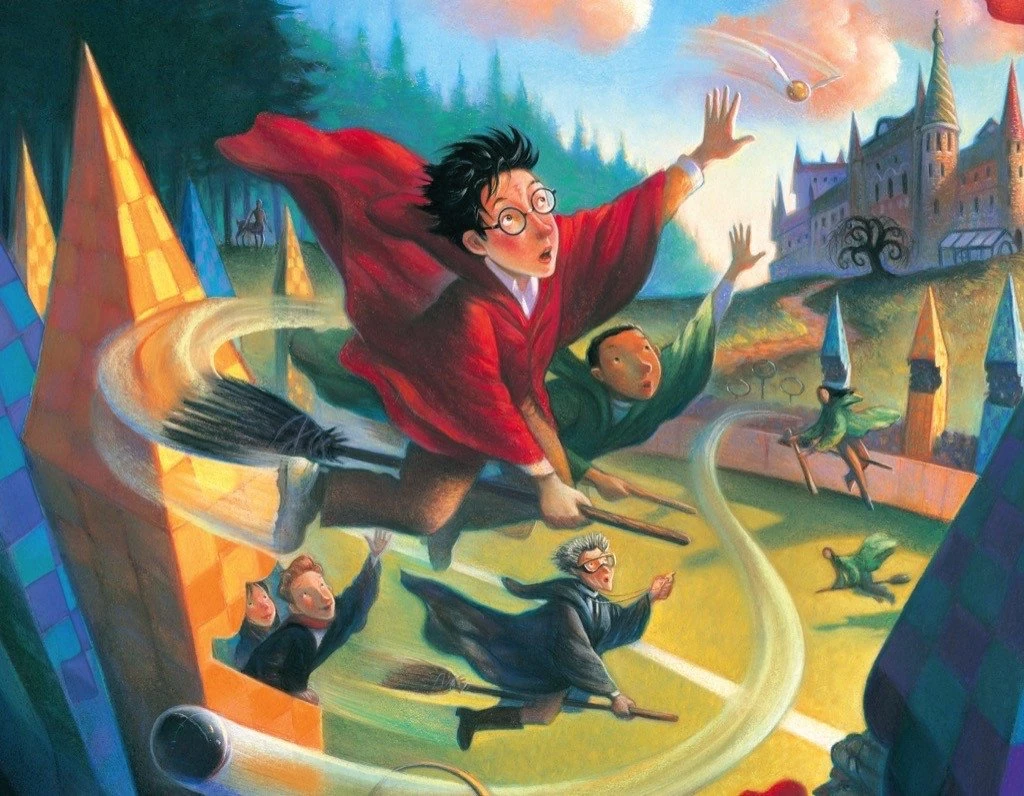
The Gryffindor Quidditch team and Harry’s first Quidditch match showcase how bravery can be both admirable and dangerous. Rowling doesn’t present courage as simply positive—sometimes bravery borders on recklessness, and the story explores when heroic actions cross into foolish ones.
What Sets This Apart
Rowling creates anticipation throughout the story, planting clues that reward careful readers on subsequent readings. The narrative builds suspense through misdirection—readers suspect one character while the real threat hides in plain sight. This technique demands readers to look beyond surface appearances, making it far more intellectually engaging than typical middle-grade fiction.
The Mirror of Erised perfectly demonstrates Rowling’s symbolic depth. When Harry sees his parents reflected back at him, readers witness his deepest desire for family while learning Dumbledore’s advice to Harry that “it does not do to dwell on dreams and forget to live.
Who Should Read This
Perfect for:
- Young readers discovering the joy of fantasy literature
- Adults seeking literature that respects their intelligence while remaining accessible
- Anyone interested in how fantasy can illuminate real-world social issues
- Readers who enjoyed The Chronicles of Narnia or His Dark Materials
Skip if:
- You prefer realistic fiction without fantasy elements
- You need fast-paced action throughout without character development
Memorable Quotes
“It does not do to dwell on dreams and forget to live, remember that”
Albus Dumbledore
“There are some things you can’t share without ending up liking each other, and knocking out a twelve-foot mountain troll is one of them.”
“It takes a great deal of bravery to stand up to our enemies, but just as much to stand up to our friends.”
Albus Dumbledore
“Harry then did something that was both very brave and very stupid.”
Cultural Impact and Literary Achievement
The success of Harry Potter and the Philosopher’s Stone launched one of literature’s most beloved series, spanning seven novels from Chamber of Secrets through Deathly Hallows. The 2001 film adaptation introduced these stories to global audiences, spawning a successful eight-film franchise. More than two decades later, the Harry Potter universe continues expanding through new projects, video games, and illustrated editions—all built upon the solid foundation Rowling established in this inaugural novel.
What makes this novel in the Harry Potter series exceptional is its exploration of fundamental human experiences through a fantasy framework. The wizarding world provides a lens for examining identity, moral choice, and the nature of courage. Professor Minerva McGonagall, Lord Voldemort, and other characters introduced here establish psychological complexity that will develop throughout the book series.
Bottom Line
Harry Potter and the Philosopher’s Stone offers profound insights into belonging, moral courage, and human connection, all wrapped in masterful storytelling. Although some may find the pacing slows down at times, Rowling’s strong storytelling, with its evergreen themes and loving, iconic characters, makes this book a must-read. It offers both entertainment and insight for anyone looking for meaningful literature.
Worth your time?
Absolutely—this first novel in the Harry Potter series demonstrates why certain stories become cultural touchstones that speak to universal human experiences.




Truly said! Beyond spells and potions, Harry Potter teaches us what real friendship and courage mean.
🙏🏻